

Climate change is rapidly becoming one of the largest drivers of global displacement. Extreme weather events drive families and entire communities from their homes, and climate impacts intensify existing drivers of displacement like persecution and violence.

The stories of climate displaced people illustrate the complex and sometimes surprising ways that climate impacts drive global migration. The profiles of climate displaced leaders below show the wide diversity of experiences immigrants and refugees have with climate and migration.

Watch the stories
Ahmed
I am Ahmed. I’m originally from a rural village in the Noakhali District of Bangladesh. I started my journey immigrating to the United States in March of 2008, and after 9 long months crossing multiple continents and dozens of countries, I finally reached Brooklyn, New York, in November of 2008, and it’s been my new home ever since.
As soon as I arrived, I was eager to begin working and supporting my family that remained in Bangladesh. I have 4 brothers and 3 sisters, and together we have supported our 3 youngest siblings since our parents passed away when we were young. It is for them that I made the difficult decision to come to the United States for work after we repeatedly faced cyclones and devastating floods year after year.
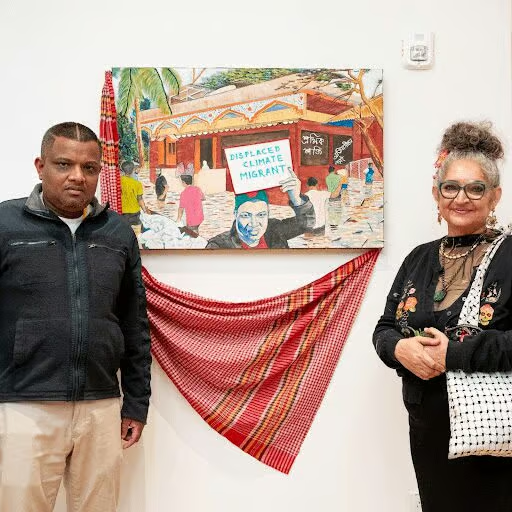
In 2004, there was a severe flood that lasted 2 months. The government didn’t offer any support or provide shelter. We tried to raise our house on bricks, but it was no use. Our home was completely submerged. Everyone in our village suffered. All the crops were destroyed so we had no income. The fish we used to catch and eat were carried away with the flood waters. My family was starving. We were surrounded by water, but none of it we could drink. It was only through the village coming together and trying to collect aid and money, that we were able to get by. I feared my family wouldn’t survive unless I could find a way to support us from another country.
We could not rely on the government to help us recover after a disaster. In fact, all the government could offer was a loan, but failure to pay this loan meant potentially losing the only land and source of food you had. My family was very poor. We had no proof of income, so I knew I wouldn’t qualify for any type of visa. Instead, I borrowed ৳25,000 to pay a trafficker to get to the US.
There were many hopeless moments where I was scared I wouldn’t make it – crossing the sea for hours, facing big waves without a life vest, or crossing the border in a hot and packed covered truck, being told we had to be absolutely still and quiet or we would be caught. But I never thought about going back home because we have already lost everything. How could I rebuild my home or produce crops for my family?
Now, although I can’t go home, I’m able to provide for my brothers and sisters. And since I joined DRUM – Desis Rising Up and Moving – in 2017, I have tried to attend every single meeting and become a defender of human rights in my community. That is why I’m here with you all today to share some of my story and how climate change is affecting communities like mine facing worsening disasters year after year and losing what little we have to survive.
Thank you for listening to my story and for supporting communities displaced by this climate crisis. We must come together to reduce the harm of climate change and ensure people have both the right to stay, rebuilding in their communities, and the right to leave when necessary.
Beatriz
My name is Beatriz, and I’m a proud Moskitia woman from Nicaragua. My Moskitia people have become targets of the Nicaragua government for not supporting President Ortega. For a long time, we have had to struggle against colonial powers occupying our land, but once the Ortega regime came to power in 2015, the violence intensified.
The government began arming mestizos (non-indigenous people) and helping them reach our lands through the mountains in order to forcibly remove us. If we refused to leave, they could kill us with impunity. Two of my cousins lost their lives trying to defend our right to live on our land. Our village representatives were captured and imprisoned until finally being exiled. The government is trying to eliminate us from our lands so that they can mine it for gold and oil, and sadly, there is little we can do to stop them.
In 2020, my village took a direct hit from back-to-back hurricanes, Eta and Iota. My home, like the rest in our village, was made of wood, and it was completely destroyed by the force of the winds. It rained for an entire night, and our village was flooded. Trees fell on top of homes, and our crops were devastated. The sea life we depended on for food and income were gone.

The government tried to take advantage of this climate disaster. If we agreed to vote for President Ortega in the upcoming elections, they would offer us food, money and work. But we we’re firm in our convictions and could not accept a corrupt government. In response, the government began to resettle mestizos displaced by the hurricanes in our territory, promising to build them homes for free and offer them new jobs. We asked ourselves, where can we go now?
My husband was the first in our family to immigrate to the United States with our 11-year-old son in 2021. My eldest son later followed with my brother. In November of 2022, I was able to save $1,000 to cover the trip and leave with my youngest daughter who was 5 years old at the time. I had fears about being kidnapped by Mexican gangs, being killed by the cartel, or drowning as we crossed the Rio Grande to the US as so many unfortunate people have. I went on this journey blindly with only God’s grace protecting us. After reaching the border, I was detained for 3 days before being released to go live with my brother in Baltimore, Maryland.
My brother was a member of CASA and that is how I was able to receive legal support and begin my asylum process. I was never asked about the hurricanes for my asylum case, and I didn’t think to mention it at first. It was only after I learned about climate justice at CASA that I realized how the hurricanes had displaced us and were weaponized against us.
I’m grateful to be here today, to be able to support my family that remains in Nicaragua, and to be a voice for my indigenous people, the Moskitia. The world must take action to fight climate change, and at the same time, bring justice to indigenous and immigrant communities like mine.
Malado
Malado Barro has been an active member of African Communities Together (ACT) since 2014. Originally from Mali in West Africa, Malado arrived in New York City 29 years ago after she completed her Masters from the University of Quebec in their Natural Resources Sciences program in 1995. As a child, Malado’s father raised animals that she would be responsible for shepherding to graze and find water. It was a big responsibility for a young woman during those times, but those moments when it was just her with the animals and land she truly felt freedom and most connected with nature. It is where her love for nature and dreams of raising fishes began. In the early 70s, Mali experienced five years of relentless drought that had brought catastrophe to millions of people in the sub-Saharan region causing famine that took a grim toll of at least 100,000 people in the area and livestock communities depended on for food. For Malado and her family, water became harder to obtain and they had to travel very far to find it. Research indicated the four main causes of the Sahelian droughts were sea surface temperature changes, vegetation and land degradation, dust feedbacks and human-induced climate change.
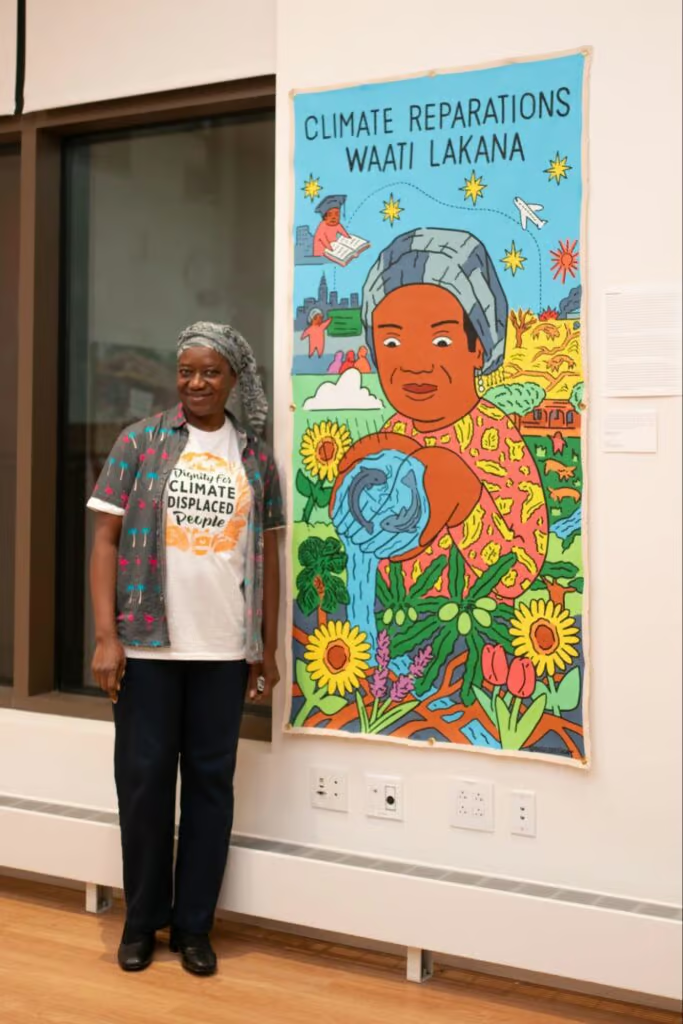
The Sahel droughts of the 1970s and 1980s played an important part in laying the foundations for the political turmoil, violence and mass migration that occurred in the 1990s. Malado briefly returned to Mali after completing her studies in 1995, but because of the conflict, scarcity of land and inability to cultivate crops, she, like many other Malians, left the country for more stability and opportunities. She dreamt of having a pond to raise fish, but because of the ongoing conditions in Mali it did not give her much hope to stay in the country. She accepted an offer to complete her studies in Aquatic Environment in Louisiana in 1995 and moved to New York City in 1997 where she previously taught high school biology.
Malado is also a certified interpreter providing services in Bambara/Mandingo, French and English and has been interpreting since 2014, where she received her first interpreting training from the International Refugee Committee. She started to interpret in hospitals and in schools to help Africans make their voices heard.
Since recording her climate displacement story in 2024, Malado has begun the process of returning to Mali to develop a sustainable farm on her property using the pisciculture techniques she studied in Louisiana. She is excited to use her farm to give young Malians tools to adapt to climate change.
Patricia
My name is Patricia, I am from Cameroon in Central Africa and an asylum seeker here in the USA. I came to the USA in March 2022, due to the violence I witnessed because of an ongoing civil war in my country. I had to run for safety for my life and that of my family.

Prior to migrating to the USA I had migrated internally inside my country in 2015 from Maroua in the Far North region to my home town Bamenda due to the effects of climate change which led to harsh climatic conditions that had serious negative effects on the health of our children. My husband and I had moved to the Far North Region of Cameroon- Maroua permanently where we both had jobs.
The Far North Region is part of Cameroon, which shares boundaries with Lake Chad, and is the driest area of Cameroon. The Far North region of Cameroon has two seasons: a dry season and rainy season. The climate is hot and semi-arid, with a rainy season from mid-May to September, (5 Months)while the rest of the year (7 months) is characterized by hot and dry weather, often with scorching sun above 40-45oC. During the hottest months from March to May average temperatures are above 92 °F and can go up to 105°F, all rivers dry up and water becomes very scarce. In some localities women get up as early as 4am and walk kilometers to get water.
Due to global warming and increasing temperatures the rains now come much later for only 4 months with strong winds and more rains causing floods and loss of properties. The flooded areas become good breeding ground for mosquitoes causing Vector-borne diseases like Malaria, and other diseases like heat boils, cholera and meningitis especially in children. This year 2024 in May due to the extreme heatwave, the highest record in history in that area, 50 to 60 people died everyday, especially amongst the elderly and children.
Life in the Maroua was very very difficult and unbearable due to the extreme heat causing me constant health issues living as an individual. It became worse when I had children. I had three of my kids in Maroua. They were always sick and could only enjoy good health for as little as two to three months in a year during the cold periods, and we spent lots of money (about 30% of our salaries) on their health navigating from one hospital to the other each month.
I remember a time when my daughter was sick with malaria and bacterial infection causing her to have very high fever. Five nurses were on her trying to get her vein to no avail, I had visited all hospitals in the town and they tried all kinds of medicines to no avail but she kept falling sick. I was so desperate as a first time mum not knowing how to help my daughter. Her two brothers would experience constant malaria, bacteria infections and a lot of painful heat boils during the hot seasons. I almost lost my brother when he was about 5 months old. He was so sick with high fever, the doctor tried every medication to bring down the fever and identify the cause of the illness to no avail, and decided to transfer him to another hospital. That is when I broke down, believing he was dying until a nurse proposed an antibiotic that was new and had not been used in that hospital which helped to reduce the fever and treat the infection. I equally lost my cousin due to Meningitis in Maroua. Many other unfortunate kids have died and continue due to climate change.
The frequent health challenges of our children caused a lot of absences at work and complaints from my boss. Due to these challenges we decided to leave Maroua to the North West region with a favourable climate, and I resigned from my job as administrative assistant in Plan International a non profit organization and remained unemployed for two years. But I was excited and at peace because my kids enjoyed good health and became more healthy. Little did I know my joy would be cut short when war broke out in the Northwest region in 2017 and my husband and I became targets and our lives were threatened. I survived two kidnappings with my kids witnessing it crying and wondering if their mum will come back alive. For our safety and that of the kids we moved to the USA.
Why am I telling my story? Before I joined the Climate Justice movement, like many other people, I never knew that I had a climate displacement story. By telling our stories, we educate people and help to bring out the reality of climate change and the effect on migration, be it internal or external migration to other countries it does not matter. Climate change is real and intensifying the factors that lead to forced migration is important. Which is why we must prepare to welcome people displaced by climate change instead of turning migrants away or criminalizing them. We must advocate for new immigration pathways and expand existing legal pathways to take into consideration the devastating effects of climate change. During my asylum procedure, there was no question related to the climate impacts I experienced in my country.
We must also demand that polluting corporations and rich nations that are primarily responsible for causing the climate crisis, pay for the loss and damage they have caused and invest in the resources that vulnerable communities need to overcome the impacts of climate change and stay in their communities and thrive.
We need global climate justice now! Thank you for listening to my story.
Ahmed
Ahmed dreamed of building a small house in his coastal village in Bangladesh. But increasingly severe floods and cyclones, driven by climate change, washed away his home and those dreams. In 2004 Ahmed’s village helped him come up with the funds to make it to New York so he could support his family and community from abroad. Ahmed now organizes for the dignity of Bangladeshis in New York, and raises needed funds that help his community back home weather the ever increasing storms.
AnnDionne
Born on the island of Pohnpei in Micronesia, AnnDionne grew up on Maui, Hawaii. As a housekeeper in Lahaina, where ⅓ of the population is foreign born, she experienced the 2023 Maui wildfires firsthand. After the fires AnnDionne began working with Roots Reborn, helping non-citizens navigate the recovery and advocating for more inclusive disaster response.

Beatriz
As an indigenous Moskito woman Beatriz faced government persecution. After back to back Hurricanes Eta and Iota devastated her community in 2020, the government took advantage of the situation withholding disaster aid from Miskito people unless they promised their political support, and instead using those resources to resettle others in their territory. Like many in her community Beatriz was forced to leave Nicaragua and seek asylum in the United States.
Malado
As a young shepherd girl in Mali, Malado experienced the devastating drought of the 1970s. After seeing her beloved animals die from lack of water, Malado pledged to build a farm that could thrive in Mali’s changing climate. She came to the United States to study sustainable farming methods like aquaculture and catfish ecology. She is now ready to return to Mali and train a new generation in sustainable agriculture.

Patricia
Patricia’s family experienced the extreme heat and floods in Cameroon’s extreme north region, leading her children to develop severe health issues, and forcing them to migrate internally to the cooler northwest. When ethnic conflict broke out in the northwest in 2017, Patricia’s family was targeted and she was forced to leave the country.


Ahmed
AnnDionne

Beatriz

Malado

Patricia
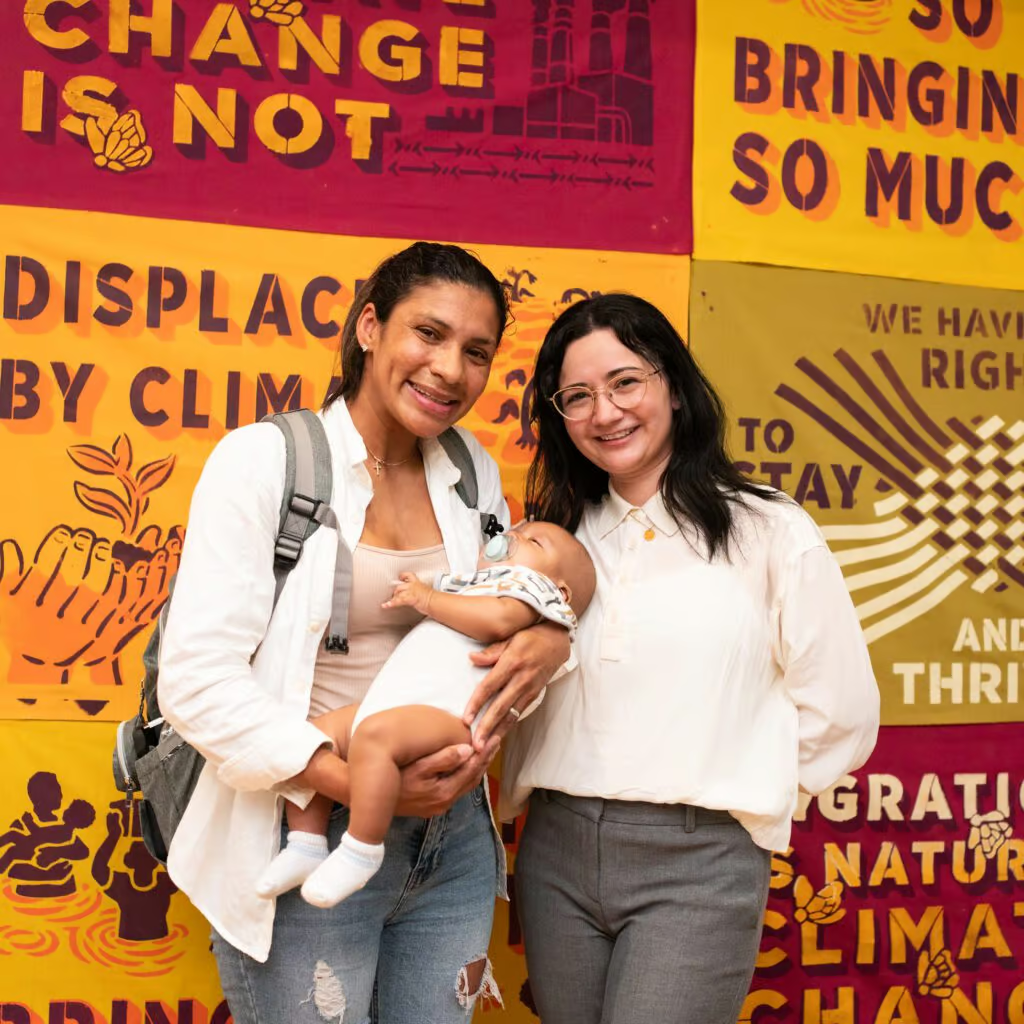
This series profiles five leaders from NPNA’s network, each with unique and complex experiences of climate, displacement and migration. Their stories stand in contrast to the dangerous narratives of climate and migration often portrayed in the media.
Their journeys do not end upon arrival in a host country. Around the world, climate displaced people come carrying so little, but bringing so much.
They are part of a rapidly growing multi-ethnic, multilingual community united by shared experience and demanding dignity and real solutions.

The Right to Stay
The Right to Stay
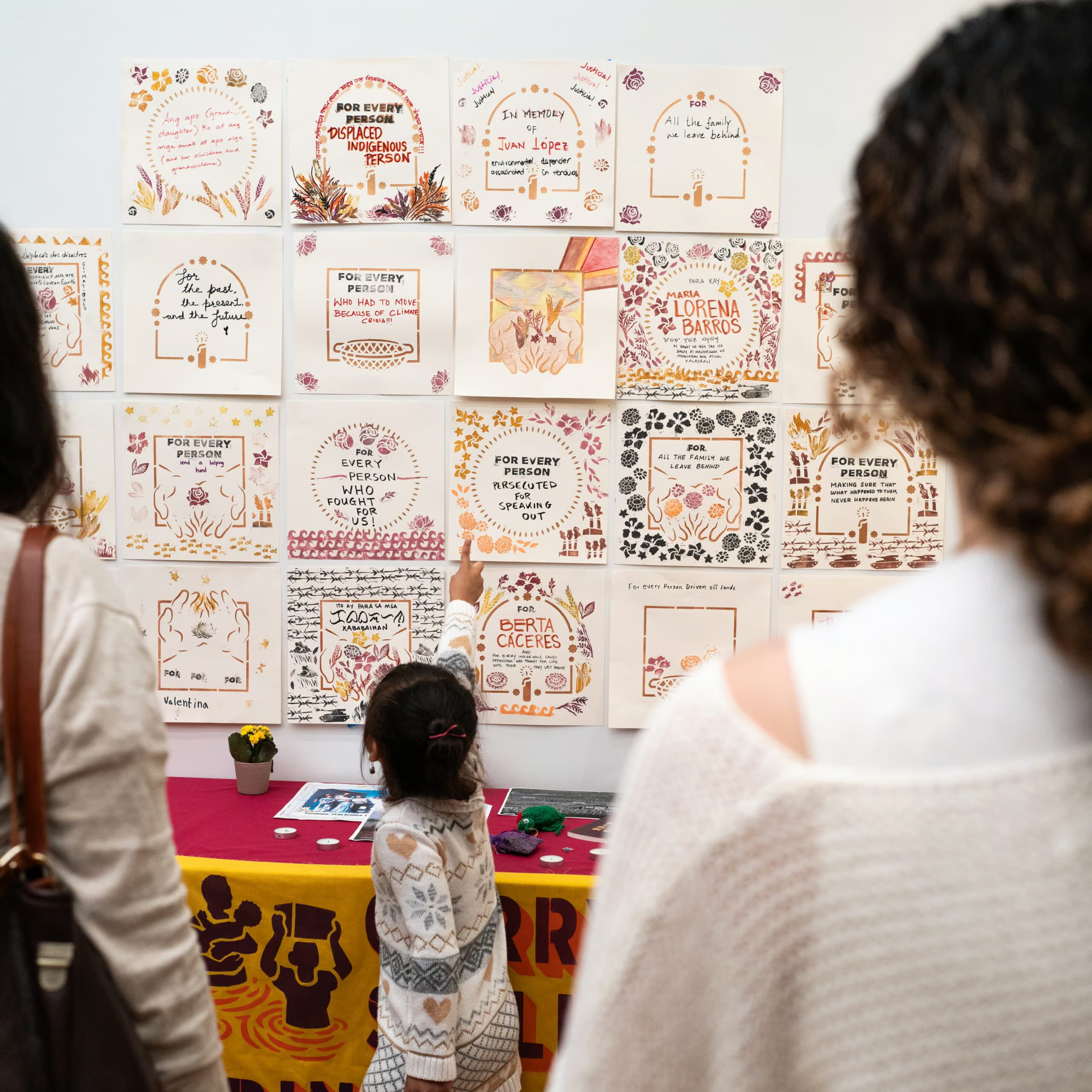
The yearning for home and community is a universal human experience. The vast majority of people displaced in part or whole by climate impacts do not cross international borders, and hope to stay in their communities to rebuild.
Devastating climate impacts are happening across the globe, but global displacement happens where communities lack, or are denied, the resources to build resilience and adaptation.
The call for climate justice must include ensuring a right to stay and thrive for those on the frontlines of the escalating climate crisis.
Ensuring this right requires investment and reparations flowing from the countries in the global north who have profited the most from the use of fossil fuels, to those in the global south facing the disproportionate consequences of climate change. As well as protections from social and political persecution and rights to historic lands.
The Right to Leave
The Right to Leave
The climate crisis has already contributed to the forcible displacement of people across national borders and its impacts continue to worsen. For some people, migration is the only reasonable adaptation to climate impacts.
The call for climate justice must include ensuring a right to leave with dignity for those who cannot remain in their homes as the crisis escalates.
Climate impacts are rarely the sole reason a person, family or community are forcibly displaced, but rather intensify other drivers of displacement including persecution, political instability, armed conflict or gang violence, and economic desperation.
This means meeting the challenge of the climate crisis requires a defense and expansion of existing migration pathways like asylum, refugee resettlement and family reunification, in addition to efforts that consider the unique challenges faced by climate-impacted communities.
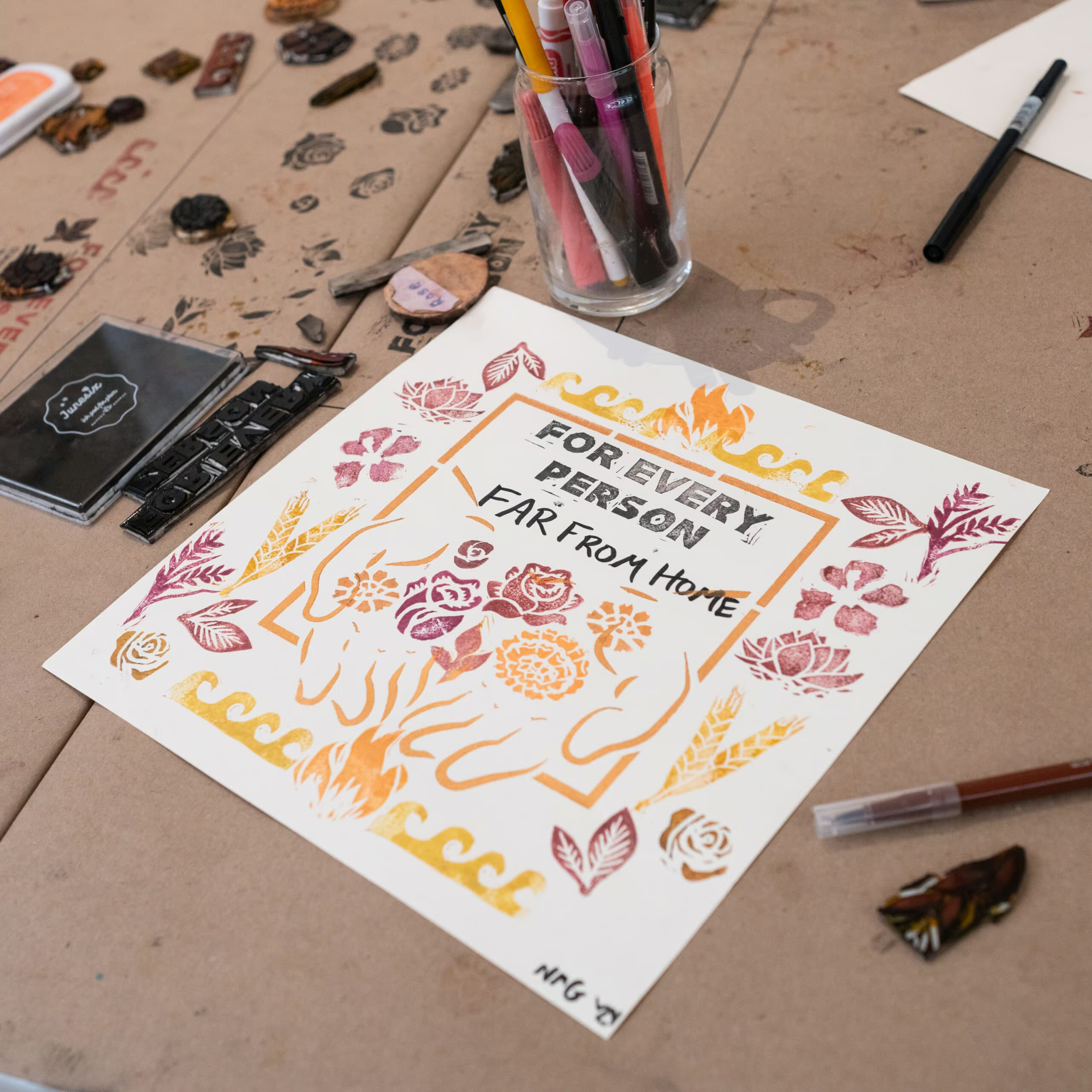
Founded in 2022, NPNA’s Climate Justice Collaborative organizes immigrant and refugee communities for climate justice – both as frontline communities in the United States and as people increasingly forced to migrate across borders due to climate impacts.
This video series was produced in partnership with Communities United for Status and Protection and Desis Rising Up & Moving.
For media inquiries contact ahmed@partnershipfornewamericans.org
To learn more about the Climate Displaced Leaders program contact gabriela@partnershipfornewamericans.org